
Ever since Owen Dale’s Plymouth Argyle loan concluded at the end of last season, it’s been clear that the Pilgrims needed to sign a winger. And following his release from Oxford United, Dale appeared keen to become that signing. For the last few months, the two parties have been involved in a bizarre stand-off, with Dale training locally in the hope of securing a contract, and Argyle doing their best to ignore his advances.
Briefly, it looked as though Michael Baidoo would be the man to fill Dale’s void on the left flank. The Ghanaian, once Argyle’s record signing, had been a complete disaster ever since joining in January 2025. But with no other clubs keen to take him (and Argyle CEO Paul Berne bizarrely saying the sale of Lorent Tolaj allowed Argyle to keep Baidoo around), he joined the team in pre-season and looked decent…before his injury against Bristol City ruled him out of action for several months.
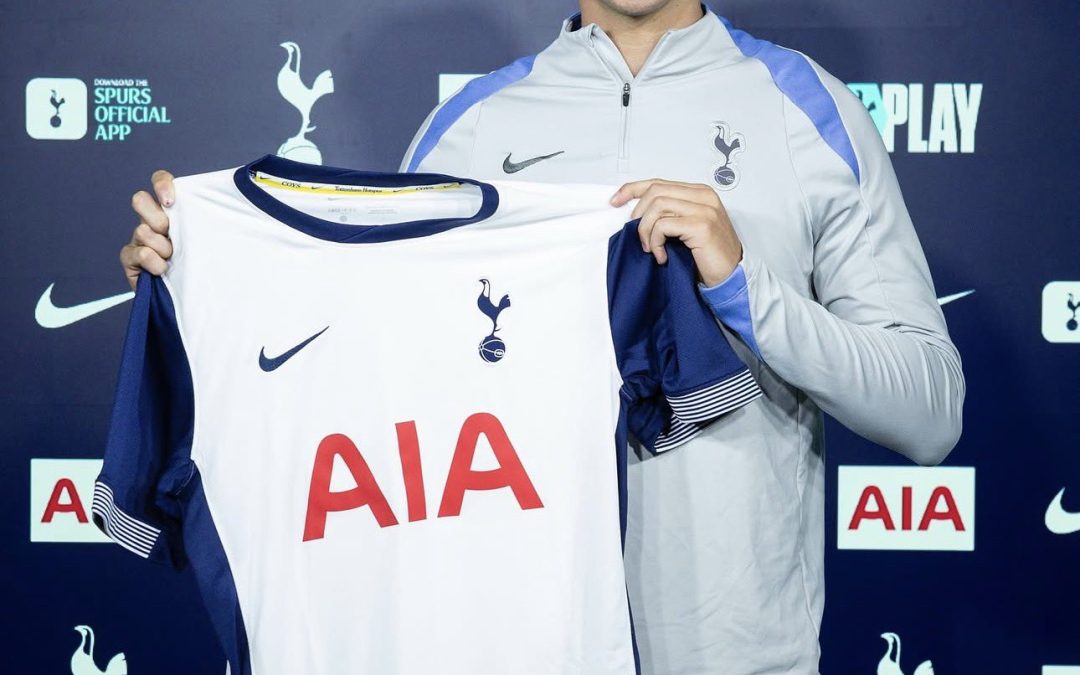
It’s taken a while, but Argyle have finally signed a wide man. It’s not Dale, but rather Oliver Irow, who joins on loan from Tottenham Hotspur. The 20-year-old spent the second half of last season on loan at Mansfield Town, and now prepares to spend a full campaign in League One with the Greens.
My immediate instinct is that we’re in the territory where writing this sort of piece is difficult. Irow’s 17 league appearances at Mansfield last season were the only senior league appearances he’s made in his career, and ten of those were from the bench. As much as it pains me, I’ve had to include the six times he appeared for Tottenham’s academy side in the pizza cup to increase the size of the stats sample.
Still, that at least gives us 850 minutes of football to work with. We can at least get some brief ideas about the man Argyle have drafted in.
Assessing attacking output
Is Irow going to offer enough going forward to satisfy Argyle’s needs? Well, it must be said that the early signs are incredibly positive.
Between Irow’s arrival being announced and me having the opportunity to write this piece, he has already played his first Argyle game. He looked incredibly lively, and crucially also scored in the Pilgrims’ League Cup encounter with Coventry City. In doing so, Irow equalled Dale’s goal tally at Argyle, across his 32-game spell, within 21 minutes.
Irow is no stranger to well-taken right-footed goals. In fact, he isn’t even a stranger to well-taken right-footed goals at the Barn Park End. He’s scored against Argyle before, with a huge pizza cup caveat attached, by notching a late consolation for Spurs’ academy in their 6-2 defeat at Home Park last season.
It must be said, however, that Irow isn’t the sort of player who can only score one type of goal. He caught the eye of many last year by scoring a brace against Port Vale during his first game for Mansfield, in what was technically his professional debut. Any sumptuous curlers like his second goal that day would be hugely welcome in a green shirt.
Overall, we have six goals on record for Irow before joining Argyle: two in the pizza cup for not-technically-Tottenham, and four in League One during his spell with Mansfield. Distributed over his 850 minutes, that gives him an average of 0.64 goals per 90. In the league, Bim Pepple was the only Argyle player to beat that figure last term.
| Player | Goals per 90 |
| Bim Pepple | 0.66 |
| Oliver Irow* | 0.64 |
| Lorent Tolaj | 0.63 |
| Owen Oseni | 0.52 |
| Caleb Watts | 0.34 |
| Bradley Ibrahim | 0.26 |
Irow seems to be the sort of player who gets himself in positions to shoot regularly. Across his career, he’s taken an average of 2.75 shots per 90. That’s more than anyone to have regularly played as a winger for Argyle managed last term. Indeed, Irow’s 2.75 figure was only beaten by Pepple and Lorent Tolaj.
| Player | Shots per 90 |
| Lorent Tolaj | 3.77 |
| Bim Pepple | 2.94 |
| Oliver Irow* | 2.75 |
| Joe Hatch | 2.69 |
| Xavier Amaechi | 2.43 |
| Caleb Watts | 2.40 |
Obviously, there are huge caveats attached to this data. 246 of the minutes played (just under 30% of Irow’s total) came in games which cannot reasonably be considered senior competitive fixtures, regardless of what you think of the competition as a whole. And even if they were, Irow only has 850 minutes on record across his entire career. It’s a sample size which, when combined together, doesn’t even make up 10 full games of football. Any stats, therefore, must be taken with a significant helping of salt.
What they can do, however, is offer indications, which we can compare to the evidence we’ve already seen. On Tuesday night, Irow gave the impression that he’ll offer a significant amount when pushing forward from the left flank. His stats, limited though they may be, back up that impression.
A genuine wide solution?
So far, we’ve at least got decent evidence that Irow will get himself into the opposition’s penalty area regularly, and he’ll get plenty of shots away as a result. That’s all well and good, but Argyle haven’t signed him as a striker. Irow, as his debut and the entire transfer saga would suggest, has been brought in as a wide player, and he’ll need to be adept at several facets of a traditional winger’s game. In assessing whether he is, I’d suggest the initial signs are mixed at best.
To Irow’s credit, he certainly doesn’t appear to be shy when it comes to running at his man. He’s attempted an average of 3.18 dribbles per 90 across his career, which would have ranked third at Argyle last season behind Tegan Finn (4.84 with an even smaller sample size) and Xavier Amaechi (4.68). The way he ran at defenders who’ll be playing Premier League football this season on Tuesday night should give us encouragement for the remainder of the campaign.
| Player | Dribbles attempted per 90 |
| Tegan Finn | 4.84 |
| Xavier Amaechi | 4.68 |
| Oliver Irow* | 3.18 |
| Caleb Watts | 2.63 |
| Freddie Issaka | 2.20 |
| Bali Mumba | 2.19 |
Where I am slightly more concerned, however, is what he does at the end of those dribbles. Whilst he does appear to have a strength in finishing chances himself, he’s struggled more when it comes to creating those chances for others. Take Ronan Curtis, who could prove a useful comparator given that he may well play on the opposite flank to Irow for much of the campaign. Curtis completed an average of 2.77 crosses per 90 in an Argyle shirt last season. Across Irow’s career, that figure is 0.85.
That’s also reflected when looking at chance creation more generally. Irow’s average of 0.42 key passes per 90 is lower than any Argyle winger managed last season bar Freddie Issaka, who didn’t register a key pass in 41 minutes of league football…
| Player | Key passes per 90 |
| Xavier Amaechi | 3.03 |
| Ronan Curtis | 2.92 |
| Matty Sorinola | 1.58 |
| Tegan Finn | 1.02 |
| Bali Mumba | 1.01 |
| Owen Dale | 0.95 |
| Oliver Irow* | 0.42 |
| Freddie Issaka | 0.00 |
…and it’s a very similar story when it comes to big chances created.
| Player | Big chances created per 90 |
| Ronan Curtis | 0.64 |
| Xavier Amaechi | 0.52 |
| Matty Sorinola | 0.29 |
| Tegan Finn | 0.25 |
| Owen Dale | 0.14 |
| Oliver Irow* | 0.11 |
| Bali Mumba | 0.04 |
| Freddie Issaka | 0.00 |
So, those are the signals when Irow is in possession. But what about when he doesn’t have the ball? The best place to start would probably be with defensive actions, and again those numbers aren’t particularly strong in Irow’s case.
Across his career, the 20-year-old has completed an average of 1.69 defensive actions per 90. That would have ranked dead last against those to have played on the flanks for Argyle last year. Ok, the inclusion of some on the list may seem harsh – Matty Sorinola, for example, is a completely different player. However, Irow’s figure is poor regardless of the lens used. It’s comfortably lower than the figure Amaechi, who often faces criticism for his defensive contribution, managed last year.
| Player | Defensive actions per 90 |
| Matty Sorinola | 6.06 |
| Owen Dale | 4.56 |
| Xavier Amaechi | 4.42 |
| Ronan Curtis | 3.91 |
| Bali Mumba | 3.33 |
| Tegan Finn | 2.80 |
| Oliver Irow* | 1.69 |
| Freddie Issaka | 0.00 |
I think we may need to be realistic about the player Argyle have signed. Irow looks to have talent, is clearly fancied by several in the game, and could make an impression at Home Park this season. What he doesn’t appear to be, however, is someone who can comfortably slot in on the left of Argyle’s 4-4-2, particularly to directly replace Dale, who appears to be a completely different type of player.
Either Irow will need to play in a different position (possibly as one of the front two?), the shape itself will need to be changed, or the player himself will need to adapt quickly.
Warning against firm conclusions
I am obviously an obsessive, and can’t help myself when taking a look at any numbers a player posts. That’s true no matter how relevant or convincing they may be. However, I do wish to take a moment to add (or, more accurately, reiterate) key caveats, and explain why drawing firm conclusions here is more problematic than it may be for other players.
The first problem is the sample size point. I know I’ve already mentioned it, and I’m sure we’re already getting bored of me mentioning it, but I’m going to mention it again anyway because it’s so important in the context of Irow as a footballer.
A significant minority of Irow’s “professional” minutes came in a tournament where he was representing an academy side.
850 minutes, across an entire career, isn’t really sufficient to make any firm judgments on any player. Before his injury, Malachi Boateng would probably have played more than that for Argyle in the first two months of the season. That a significant minority of Irow’s “professional” minutes came in a tournament where he was representing an academy side adds further discolouration to already muddied waters.
It’s not completely useless information, hence me relying on it for the majority of this piece, but in an ideal world I’d much prefer to have more data to investigate.
It’s particularly problematic when we’re considering metrics with small numbers in the first place – goals, for example, happen far more infrequently than successful passes. Had he scored one more goal across his career, he’d comfortably have scored more goals per 90 than any Argyle player last term. One fewer? He’d barely slot into third. The numbers can be that erratic on this scale.
Additionally, and perhaps more subtly, Irow’s short career may provide some mitigation to his perceived weaknesses. For example, Irow hasn’t got a proven track record of offering enough defensively as a wide player in a 4-4-2…but there’s no clear evidence that he definitely can’t do that either. As far as I can tell, it’s not a formation Irow has played in, so it’s entirely possible he’ll slot straight in perfectly and take a few by surprise.
Irow only turned 20 in May. He’s barely two months older than Issaka, and is several months younger than Caleb Roberts.
Finally, the profile of player Argyle have signed needs to be taken into account. Irow only turned 20 in May. He’s barely two months older than Issaka, and is several months younger than Caleb Roberts. Players at these ages can experience changes in their ability levels rapidly. Even if we had a sample size of 8,000 minutes rather than 800, there’d be no guarantee Irow would be the same player this season as he was last season.
There is always a great unknown with deals of this kind. The sample size for young Premier League loanees is invariably small, and the speed of their development means they can look like very different players from one spell to the next. I’ve identified things I think Irow will do well, as well as some potential areas for improvement, but it’ll be on the pitch we find out exactly where his talents lie.
We are proud to be working with Children’s Hospice South West (CHSW) as Argyle Life’s Official Charity Partner for the 2026/27 season. You can learn more about CHSW’s work by clicking here, and supporters who would like to make a contribution can do so via our JustGiving page.